Malaysian MP says RM600,000 is required to demolish illegal four‑storey settlement in Selangor
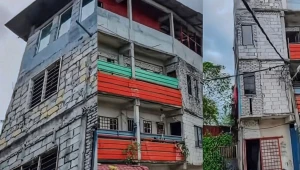
 Hulu Langat MP Sany Hamzan revealed RM600,000 is needed to demolish a four‑storey illegal Rohingya settlement in Sungai Tekali, Selangor.
Summary
Hulu Langat MP Sany Hamzan revealed that RM600,000 (S$189,720) is required to demolish a four‑storey illegal Rohingya settlement in Sungai Tekali, Selangor. The proposal has been submitted to the state technical education committee (MTES) and is awaiting state budget approval. Only three families remain at the site, as most have left. Sany emphasized that the Rohingya issue is complex and requires cooperation with the UN Refugee Agency (UNHCR). He noted that detention costs RM90 daily per person, while repatriation carries the risk of death, underscoring the difficulty of resolving refugee challenges in Malaysia. Many Malaysians expressed shock that the Rohingya community managed to construct such a large, four‑storey structure without regulation or oversight. Safety concerns have been raised, with fears that the building could topple if anything went wrong. Public anger has grown over how the settlement was built unnoticed, fueling debate about enforcement gaps and the presence of refugees. An X page alleged that once authorities catch the Rohingya community at the illegal settlement, they leave temporarily but return within days, suggesting they are overstaying their welcome by repeatedly building such structures. With demolition costs estimated at RM600,000, many online voices argue that the land owner should bear responsibility. Some accused the owner of enabling the Rohingya community by allowing the illegal structure to be built, suggesting that forcing landowners to pay for demolitions would serve as a deterrent. Bold suggestions have surfaced on social media regarding where refugee settlements should be placed, with one user suggesting relocating the Rohingya community next to a large empty plot beside the Prime Minister’s Department Complex. The remark gained traction, with many users agreeing, arguing that the government appears supportive of refugees and should therefore accommodate them closer to its own offices. The housing complex has already begun the process of demolition, but many believe the refugees will simply relocate elsewhere. The deeper issue remains unresolved — they lack secure housing and basic necessities. Without food and shelter, survival becomes precarious, and displacement continues in cycles. While enforcement removes illegal structures, the humanitarian challenge persists.
(Source:The Independent Singapore)